The Conspiracy Theory That Stevie Wonder Is Not Blind Is Getting More Popular

author
2 minutes, 44 seconds Read

Stevie Wonder is a world-famous musician who has created many hit songs throughout the decades. He first rose to fame as a young boy and sang some of the most popular songs in modern-day American music history. In addition to being a famous musician, Stevie Wonder is also one of the world’s most famous blind people – but some conspiracy theorists are putting forward the claim that Stevie Wonder might not be as blind as people think he is – but is there claim based on any fact?

Back when he was just eleven years old, Stevie Wonder released his first record after signing a deal with Motown in Detroit, Michigan. He marketed the album under the name Little Stevie Wonder, which means that Stevie Wonder’s blindness has been documented since he was a young child in the early days of middle school.
Wonder’s first hit off the album was “Fingertips,” which skyrocketed to number one on the Billboard Hot 100 list when the young singer and musician was just thirteen years old. He instantly became the youngest artist to ever reach the top of the Billboard Hot 100 chart, solidifying his musical legacy as just a youthful teenager.

Even as a young child, Stevie Wonder wore the black sunglasses that he is famous for donning to this day. He made it clear that he had a visual impairment even back when he was a child, which added to his mystique and made him even more popular among the American public.

Stevie Wonder was born blind – but that’s not what numerous conspiracy theorists claim. Nevertheless, Wonder was born six weeks early in 1950, and as a premature baby, he was diagnosed with the neonatal disease. He suffered from retinopathy of prematurity because the growth of his eyes was halted, and as a result, his retinas detached, making him blind as a bat.

However, Stevie Wonder has exhibited some behavior over the years that has made some people doubt whether or not he is blind at all. For example, a short video by Noisey explains that Stevie Wonder has done a bit too much to cast doubt on the fact of his blindness, making room for conspiracy theorists to spread the rumor that Wonder is not as blind as people think.

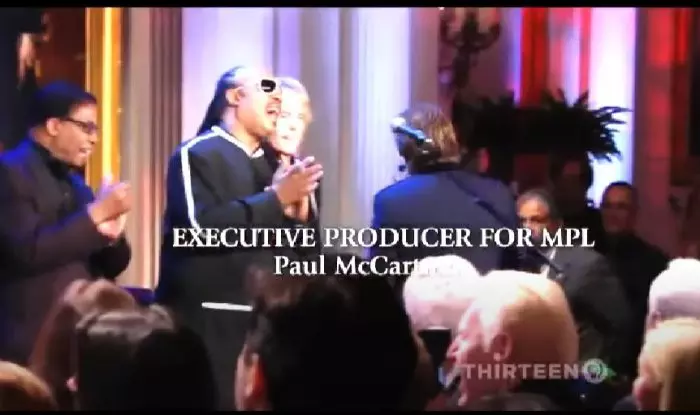
One example occurred in 2010 while Stevie Wonder was performing with Paul McCartney. During the performance, a microphone fell, and Stevie Wonder adroitly caught it before it hit the floor in a crash. The singer’s quick reflexes made some people doubt that he was blind because it seemed like he had been able to see the falling microphone and catch it before it struck the stage.
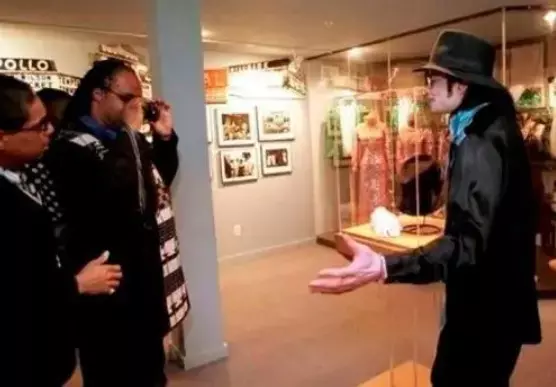
Additionally, Stevie Wonder was photographed while he was photographing singer Michael Jackson. Why would Wonder be the one to snap a photo of the King of Pop? In 2018, ESPN writer Myron Medcalf recorded Stevie Wonder during a visit to the Minneapolis airport. Medcalf caught Wonder looking at his phone and apparently taking a selfie.

Basketball legend Shaquille O’Neal shared another story that made people doubt whether Stevie Wonder was blind or not. The NBA legend was in an elevator when “the door opens. It’s Stevie Wonder.” Wonder says, “What’s up, Shaq?” and then presses a button.

Similar Posts

My Sister Kicked Me Out of the House After Dad Passed — She Had No Idea He’d Planned for That Moment === When our father passed away, I thought grief would be the hardest part to handle. I was wrong. Losing him hurt, yes, but losing my sister, the only family I had left, shattered something deeper inside me. I never imagined that the same person who once braided my hair and shared my secrets would turn around and throw me out of our childhood home. My name is Joyce. I grew up in a small town in Oregon, where everyone knew everyone’s story and sometimes added their own twists to it. My father, Henry Walters, was the heart of our home, a quiet, hardworking man who ran a small hardware store and never missed a Sunday dinner. My mother had passed away when I was twelve, so it had been just the three of us ever since: Dad, my older sister Vanessa, and me. Vanessa was five years older than I was, but she had always acted like it was twenty. She’d taken over Mom’s role quickly after the funeral, cooking, keeping the house together, and reminding me constantly that “Dad works too hard to worry about your teenage nonsense.” I loved her, I really did, but our relationship had always been complicated. Vanessa had this way of making me feel like I was perpetually indebted to her, even when I was just existing. When Dad’s health began to decline, it was Vanessa who took the reins again. She handled the doctors, the paperwork, everything. I did what I could: cooked for him, read to him, sat by his side in the evenings when he was too tired to speak. The last few months were hard, but I thought we’d grown closer as a family. I thought we understood each other. But I was wrong about that, too. Dad passed quietly in his sleep on a rainy Wednesday night. Vanessa called me from the hospital with a flat voice and said, “He’s gone.” I remember standing in the kitchen, the phone pressed to my ear, my knees shaking so hard I could barely stay upright. He’d been the anchor of our lives, and suddenly the world felt adrift. The funeral was a blur of faces, flowers, and condolences. Vanessa handled everything with her usual control. She picked the casket, arranged the service, and stood stoically by the graveside while I sobbed. People patted her shoulder and said how strong she was. No one noticed me standing alone, clutching Dad’s old watch in my hand. That watch was his favorite possession. It was old, gold-plated, and slightly scratched on the glass, but he’d worn it every day for as long as I could remember. When I was little, he used to let me wind it and listen to it tick. He said, “Time’s funny, kiddo. It can heal you or break you, depending on how you spend it.” A few days after the funeral, Vanessa asked me to meet her at the house to “talk about arrangements.” I assumed she meant splitting expenses or deciding what to do with Dad’s belongings. Instead, she greeted me with a folder in her hand and a cold expression that made my stomach twist. “Joyce,” she began, her voice measured. “Dad left a will.” I frowned. “Okay… that’s good. Did he leave something for both of us?” Her eyes flicked away for a moment, then she handed me a single piece of paper. It was a copy of the will, neatly typed and notarized. As I read it, the blood drained from my face. Everything in the house, the store, and his savings were left to Vanessa. I was mentioned once, only to receive “a personal item of sentimental value.” That was it. I looked up at her in disbelief. “This can’t be right.” “It’s legally binding,” she said, crossing her arms. “Dad must have thought I was better equipped to handle things.” I shook my head. “Vanessa, I took care of him, too. He loved us both. There’s no way he would’ve left me with nothing.” Her expression hardened. “You were never responsible, Joyce. You’ve bounced from job to job, from one idea to another. Dad trusted me to keep things in order. I’m sorry if you don’t like it, but that’s just how it is.” I felt tears burn behind my eyes. “So what happens to me now? Where am I supposed to go?” She hesitated for only a moment before saying, “You can’t stay here. The house needs to be put under my name officially, and I plan to sell it. I’ll give you a few days to get your things.” And that was that. I stood outside the house three days later, a duffel bag at my feet, staring up at the windows that held every memory of my childhood. Vanessa didn’t even come out to say goodbye. I still remember the sound of the door clicking shut behind me finally, like a punctuation mark at the end of a chapter I wasn’t ready to finish. For weeks, I drifted. I stayed on friends’ couches, picked up a part-time job at a bookstore, and tried not to think about how unfair everything felt. The only thing I had left of Dad was that watch, the one he’d given me the night before he passed. That night, he’d called me into his room while Vanessa was out getting his medication. His voice was weak, but his eyes were sharp. He handed me the watch and said quietly, “Keep this close, kiddo. When the time comes, … (continue reading in the 1st comment)