Abandoned at the age of six, Adam climbed from cardboard box to boardroom as the town’s wealthiest entrepreneur. But when his birth mother returns, he must confront the true meaning of family and the resilience that lies within him.
Six-year-old Adam huddled in a cardboard box that reeked of damp newspaper and rotting food, shivering against the chill.
Born with only one arm, he had faced challenges from the start, but nothing compared to this moment of abandonment.
His mother had left him there, and each drop of the rain felt like a huge reminder that perhaps… she wouldn’t return.
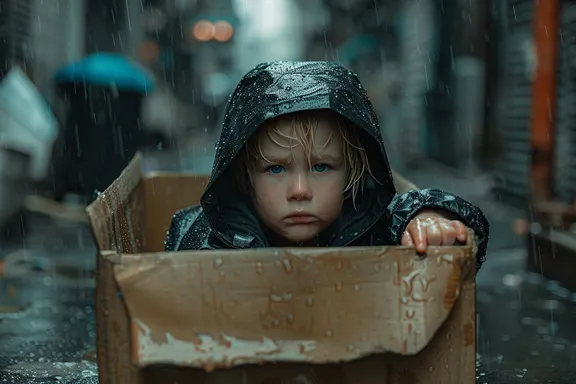
For illustration purposes only | Source: Midjourney
“Mommy?” he whimpered, peering out into the dim alley. “Please come back.”
Hours earlier, Carissa had placed him there with a sickeningly sweet smile. “Stay put, sweetie. I’ll be back with food soon. Be brave for Mommy, okay?”
But the sun had set, and still, she hadn’t returned. Adam’s stomach growled. He had no idea how long he’d been waiting, but the belly ache was getting painful.
Suddenly, footsteps splashed through nearby puddles.
For illustration purposes only | Source: Unsplash
Adam held his breath, hoping it was his mother. Instead, a kind face framed by auburn hair appeared at the box’s opening.
“Oh, you poor thing,” the woman gasped, her eyes widening in shock. “What are you doing out here all alone?”
Adam’s lower lip trembled. “Waiting for Mommy. She said she’d come back.”
The woman’s brow furrowed, and concern flashed across her face. “I’m Mary. How long have you been here, sweetheart?”
“Since the sun was up there,” Adam pointed weakly at the sky.

For illustration purposes only | Source: Pexels
Mary’s heart broke. She couldn’t fathom how anyone could leave a child like this. “That’s a long time to be alone. How about we find someone to help?”
Adam hesitated, remembering his mother’s warnings about strangers.
But Mary’s gentle eyes and warm smile coaxed him out. She carefully draped her coat over his shoulders and led him to a nearby diner.
Over a steaming mug of hot chocolate, Adam shared what happened: how his father, Harrison, died recently, and without his income, his mother lost their home.

For illustration purposes only | Source: Unsplash
Then, on this rainiest night, she left him in a cardboard box, promising to be back soon.
Mary listened as her heart ached for the boy who’d already endured so much.
“I’m scared,” Adam admitted, his voice barely above a whisper. “What if Mommy never comes back?”
Mary reached across the table, gently squeezing his hand. “We’ll figure this out together, Adam. I promise you won’t be alone anymore.”
For illustration purposes only | Source: Pexels
Mary called the authorities, including child services, and for a while, the police searched for Carissa. Meanwhile, she and her husband, Josh, opened their home to Adam.
Their modest house, with its faded wallpaper and creaky floorboards, became his home for the following weeks.
Josh reminded Adam so much of his father, but somehow, he was even warmer and more playful. But Mary was nothing like Carissa.
She loved to bake, to give hugs, and to play with him, too. However, what the boy noticed the most is that neither of them ever made a big deal out of his disability.
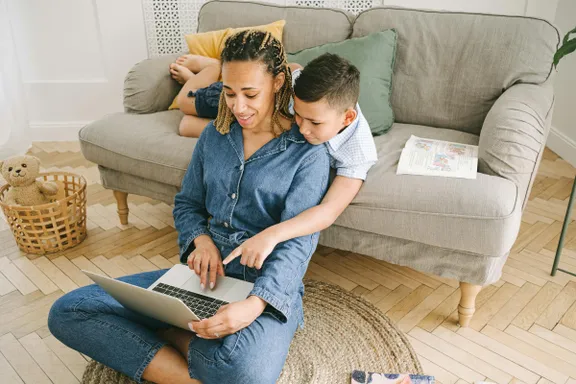
For illustration purposes only | Source: Pexels
It was part of who Adam was, and they simply made accommodations for him, almost without thinking. Carissa’s attitude had never been like that. Even at the age of six, Adam could tell that she considered him a burden.
When more time passed without any word from Carissa, Mary broached a subject they’d all been avoiding, or rather, stalling until they had more news. But it was time.
The boy had been finishing his glass of milk at the kitchen table while Josh finished helping his wife with the dishes.
However, Josh stopped when Mary gave him a signal. They dried their hands and turned to Adam.
“Adam, honey,” Mary began. “Josh and I have been thinking. How would you feel about staying with us… permanently?”
Adam’s eyes widened. “You mean… forever?”
Mary nodded, as tears gathered in her eyes. “We’d love to adopt you if that’s what you want. You’d be our son, in every way that matters.“
Adam’s lip quivered, his emotions rising to the surface. “But… but what about my arm? Don’t you want a whole kid?”
Mary and Josh both gasped at the question. Her heart shattered at the idea that Adam would even think such a thing.
She knelt on the cold kitchen floor, looking him straight in the eye.
“Adam, listen to me. You are perfect just the way you are. Your arm doesn’t define you. It’s your heart, your spirit that makes you whole. And we love every bit of you,” Mary said, trying not to blubber through the words.
Josh knelt by her side.
“We’ve been waiting for your mother to show up because I’m sure she wants you too, but it seems that she might not appear, and child services has cleared us to start the process of becoming your legal guardians first and then, adopt you officially.”
“So, would you like that?” Mary added.
Adam wasn’t sure he understood that explanation, but he threw his one arm around Mary and buried his face in her neck. “Yes, please,” he sobbed. “I want to be your son.“
The adoption process wasn’t easy, but Mary and Josh’s determination never wavered. They worked extra shifts at their respective jobs—food service and construction, and sold possessions to cover legal fees.
But their love for Adam fueled their every action, and their hard work only continued because of their strong feelings for their new son.
They wanted the best for him and managed to provide it with their efforts, even through the toughest circumstances.
On Adam’s tenth birthday, they surprised him with a prosthetic arm. As he marveled at his reflection, Josh placed a hand on his shoulder.
“Remember, son,” he said, his voice gruff with emotion, “this doesn’t define you. You can use it or not. It’s up to you because your strength comes from in here.” He tapped Adam’s chest. “You can do anything you set your mind to.”
Adam nodded and tried to speak through the lump in his throat. “I’ll make you proud, Dad.”
Several years went by, and Adam became his own person. Because of the love he received at home, he never let his disability define him.
His childhood and teenagehood were filled with Little League games, science fairs, and family movie nights. He made many friends, took trips, and even had several girlfriends.
Every couple of years, his parents gifted him a new prosthetic arm, which he used, although he didn’t feel like he needed it. Sadly, as college approached, tragedy struck.
Josh fell ill with an advanced case of cancer. His body deteriorated faster than any of them could imagine.
Therefore, Adam put his education plans on hold, determined to support Mary and care for the man who’d given him so much.
Unfortunately, no treatment helped, and the doctors told them to prepare themselves.
One afternoon, as Adam sat by Josh’s bedside, his adoptive father gripped his hand.
“Promise me something, Adam,” Josh wheezed, his voice weak but urgent.
“Anything, Dad,” Adam replied, leaning closer.
“Promise me you’ll always remember what I told you on your tenth birthday.”
Adam breathed choppily before answering in a hoarse voice. “I remember. I always will. I will make you proud.”
Josh smiled weakly, his opaque eyes still managing to reflect with love. “You already have, son. Now, follow your dreams.”
A few minutes later, Adam’s true father was gone.
After caring for Mary for several weeks before returning to his bachelor apartment, Adam channeled his grief into action.
Inspired by his own experiences, he started working hard and gathering enough savings to fund a small business, designing affordable equipment for people with disabilities.
He enrolled in night engineering and business courses, and those early days were grueling. There were moments of doubt when the challenges, costs, and demands to meet seemed insurmountable.
He might not make it.
During one particularly tough night, Adam called Mary, and she immediately heard the exhaustion in his voice. “Mom, I don’t know if I can do this. Maybe I’m in over my head. I should’ve taken things slowly, finished college, and then, start the business.”
“Adam, remember what your father always said,” Mary reminded him, firmly but gently. “You can do anything you set your mind to. This isn’t just about making money. You’re changing lives. Don’t give up now.”
The words were exactly what he needed to hear. “You’re right, Mom. Thanks for always believing in me.”
Slowly, Adam’s innovative designs gained traction, and his classes went smoother, although they were still extremely overwhelming.
However, his empathy and firsthand understanding of customers’ needs set his products apart, which translated into more orders and allowed him to hire more people to ease his load.
Five years passed before he knew it, and Adam, now a fully graduated engineer with a minor in business administration, stood in his sleek office.
He stared out the window and squinted his eyes, trying to see the little corner of their town where he had been abandoned to his fate.
Adam would never forget that location, but he had never been back there. Now, he was the most successful entrepreneur in the area.
A journalist had interviewed him and discovered his past. His rags-to-riches story inspired many others and brought in new clients and investors.
Adam touched his prosthetic arm, the latest and best technology offered. But he wished technology could bring his father back to see his success.
Instead, someone else from his past came to visit him that day.
A knock at the door interrupted his reminiscing, and Adam turned just as his assistant, Cherry, poked her head in.
“There’s someone here to see you,” she said hesitantly. “She says… she says she’s your mother.”
“My mother is visiting her friends three hours away, Cherry,” Adam frowned and sat back at his desk. “It must be another tabloid writer wanting gossip.”
“No, it’s not Mary, sir,” Cherry added apologetically. “But she looks a lot like you.”
Adam’s breath caught in his throat, and he stared at his assistant for a while before sighing. “Send her in,” he managed.
Carissa entered with her signature sickeningly-sweet smile and her arms outstretched. She was the same as ever, just older.
But Adam saw several things some people wouldn’t notice. Her cheap makeup was smudged as if it had been done yesterday or days ago.
Her clothes seemed nice, but they were clear imitations. Adam normally didn’t care about such stupid matters, but this was the woman who had abandoned him.
“Adam,” Carissa breathed. “My boy! Look at you now!“
Despite her seemingly warm words, there was no maternal love in her gaze, and even worse, Adam saw a calculating gleam.
“Why are you here?” he asked instead of wasting his time with pleasantries. He didn’t even offer her a smile.
“I see you’re mad at me,” Carissa began, sitting in the chair opposite his desk. “But let me explain. I saw that article about you…”
She launched into a tale of hardship and bad luck, each word carefully crafted to elicit sympathy… and financial support.
Adam listened silently, but his jaw clenched often.
“So, you see,” she finished, “I thought my son would help me during this hard time since he’s such a caring person with a big business dedicated to helping others like himself.”
It was then that Adam stood.
“I’m not the little boy you abandoned,” he said, buttoning his suit jacket. “I’ve made something of myself, not because of you, but in spite of you. The only mother I acknowledge is the woman who chose me, loved me, and sacrificed for me.”
Carissa’s face froze for a moment before her mask slipped. “But Adam, I’m your real mother,” she said tightly. “Doesn’t that mean anything to you?“
“Me being your son didn’t mean anything to you,” he replied, shrugging. “Please, see yourself out.”
Without another word, Adam gestured for the door, and Carissa left, but not before giving him the stink-eye.
A few days later, Adam told Mary, his real mother, all about it during dinner. As always, she could tell when he was feeling emotional.
She reached across the table and squeezed his hand. “You’re the strongest person I know,” she said, her eyes shining with love. “Being your parents was the greatest thing that happened to Josh and me.”
Despite being an adult, a college graduate, and a businessman, Adam needed to hear those words after seeing Carissa.
He nodded, sniffing to avoid crying, and they continued eating, changing the subject to something happier.